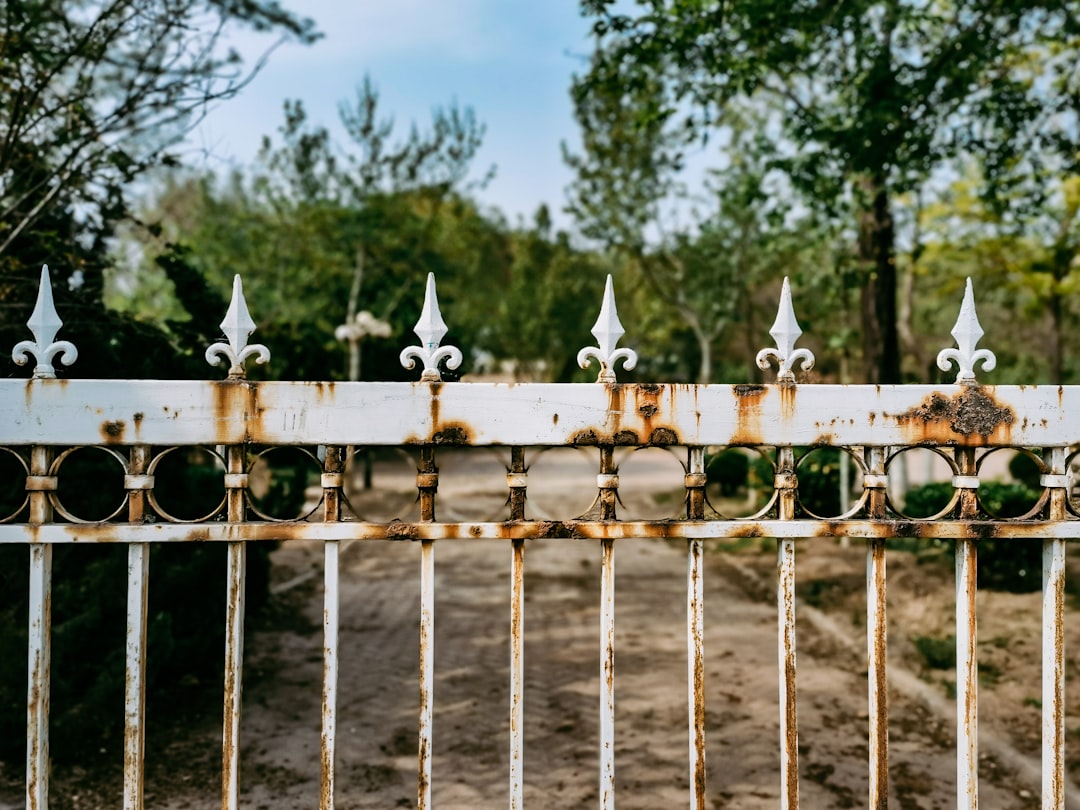
Metal gate installation in Pearland, TX

Metal Gate Installation in Pearland, TX

Steel and Iron Gates Built to Last in Pearland

Custom-fabricated driveway, security, and ornamental gates, welded and finished to stand up to the Gulf Coast climate. Free on-site estimates across the Pearland area.

Call (281) 874-4569 Get a Free Estimate

Free on-site estimatesIn-house welding and finishingLicensed and insured

Fabrication Field Notes

Craftsmanship notes from our fabricators on welding, finishing, and building gates that hold up in the Gulf Coast climate.

A modern iron gate showcasing minimalist architecture with an urban backdrop in Pearland, TX

Metal Gate Repair With a Welder in the Driveway: What On Site Hot Work Involves

The actual arc time on a typical driveway gate repair is a few minutes. A cracked corner weld is maybe ninety seconds of welding. A torn hinge plate with a doubler behind it might be four. Everything else in a three hour visit is preparation, protection, heat management and finish, and that ratio is the single most useful thing to understand about having a welder work at your house.

It explains why two quotes for the same crack can differ so much, and why a repair that looked perfect on the day can be bleeding rust at the joint by the following spring. The weld is rarely the variable. What varies is whether the coating was ground back properly before the arc struck, whether the steel was allowed to cool before anything was re-aligned, whether sparks were contained, and whether bare metal got protected again the same afternoon rather than left primed with a promise to return.

It also explains why one trip tends to cover more than the gate. Once a truck, a grinder, a cylinder and a welder are on site, the marginal cost of attending to a loose stair post, a bent window guard or the handrails on the front steps is small compared with booking a separate call for each. Most of the ironwork around a house was fabricated from the same stock, finished the same way, and is failing in the same places, so it makes sense to walk the whole property before the first piece of work starts rather than after.

What a mobile welder is genuinely there to fix

Field welding suits a specific class of fault: a local joint failure in steel that still has thickness in it.

That covers a cracked weld where the top rail meets the hinge stile, which is the most common structural fault on a swing leaf. A picket snapped at the rail, or loose and working its socket wider on every cycle. A hinge plate that has torn, or a hinge that has dished the wall of the tube it was welded to and needs an insert or a doubler behind it. A bent or sheared latch keeper. A snapped drop rod guide. A cracked operator bracket, which is extremely common because the arm applies a cycling load to one small patch of tube. A hinge or a frame bracket that has pulled its anchors out of a stucco or brick column.

What field welding does not suit is general thinness. If the bottom rail has lost most of its wall over a two foot span, laying a bead against it is welding to foil, and the honest answer is cutting out and replacing a length of steel, which is a different and larger job. A welder who taps along the member with a hammer handle and probes the suspect band with an awl before quoting is checking for exactly that.

Power and process decide what is possible at the curb

A welder's capability on site is limited by what is powering the machine and by the weather.

An engine driven welder or a generator gives the output to run heavier material and to weld continuously. A small inverter on a household circuit through a long extension lead is fine for ornamental tube and will trip or duty cycle out on anything thicker.

Wind matters more than people expect. Gas shielded welding relies on a column of shielding gas sitting over the puddle, and a steady breeze blows it away, leaving porous weld metal that looks acceptable and is full of holes. That is why outdoor repair work is often done with a self shielded wire or with stick electrodes, which carry their shielding in the consumable and tolerate moving air. If gas is being used outdoors, a screen or a blanket rigged as a windbreak is not fussiness, it is the difference between a sound bead and a decorative one.

One detail that almost never comes up and should: the earth clamp. Welding current takes the shortest path back to the clamp, and if that path runs through a hinge bearing, a slide gate wheel or an operator gearbox, it pits the bearing surfaces as it goes. Worse, an automated gate carries control boards, loop detectors, photo eye wiring and often a battery, and welding current near any of that can take out electronics. The gate should be powered down at the breaker and the operator disconnected and ideally unbolted from the leaf before the arc strikes, with the clamp placed on the same member being welded, as close to the joint as it will reach.

Paint, powder coat and galvanizing come off before anything else

This is the step that gets skipped when somebody is working quickly, and it is the one that decides whether the repair lasts.

Steel will not weld cleanly through a coating. Paint, powder coat, primer and galvanizing all break down in the arc and the products of that go into the puddle, giving porosity, inclusions and a bead that sits on top of the parent metal rather than fusing into it. Zinc is the worst of the group because it boils well below the melting point of steel, so a galvanized surface gasses off violently and leaves a weld full of voids.

So the coating is ground back to bright metal across the joint and for a margin either side, on both faces where there is access, and on the inside of any sleeve or plate that is going in. Grinding zinc also matters for a reason that has nothing to do with weld quality: zinc fume causes a genuine, if usually short lived, illness, and a welder who grinds the galvanizing off and works upwind is doing it partly for that.

Older ornamental iron brings a second hazard. Paint on ironwork from before the late nineteen seventies can contain lead, and grinding it produces fine dust. Sheeting under the work, containment of the debris and not simply letting it blow across a lawn where children play is the correct handling, and it is a reasonable thing to ask about on a house of that age.

Thin wall tube, and why burn through is the real skill

Ornamental frames are usually light wall tube, and a repair joint is frequently at a spot that has been corroding, which means the metal there is thinner than the gauge it started as.

Heat runs away into pitting rather than building a puddle, so settings that would be right for sound steel punch a hole straight through. The techniques that keep this in hand are all forms of patience: lower current, short stitches rather than one continuous run, moving around the joint so no single area soaks, and stopping to let the work cool. A backing sleeve slid inside a tube gives the weld something to fuse into and stops the puddle dropping through. Where a hole has already opened, a plate welded over it is legitimate if the surrounding metal measures sound, and it is a cover up if it does not.

A repair done fast on thin tube looks heavier and shinier than a repair done properly. A lot of weld metal piled onto a thin section is a sign that something kept blowing out, not a sign of strength.

Heat moves steel, so the sequence is measured

Welding shrinks metal as it cools, and a bead run along one face of a frame pulls that face shorter. On a twelve foot leaf hanging on two hinges, a small pull at a corner becomes a visible misfit at the latch.

The practice that avoids it is to measure both diagonals before any work starts, so there is a number to return to, clamp or tack a temporary brace across the leaf before cutting anything out, and alternate the welding around the joint rather than finishing one side and then starting the other. Then wait. Steel that is still warm is still moving, and judging alignment or resetting operator limits on a hot leaf produces a gate that fits beautifully at four in the afternoon and binds the next morning.

Hot work on somebody's driveway

A grinder throws sparks a surprising distance and a cutting disc throws them further, in a flat fan that bounces off concrete.

The things that catch on a residential property are all ordinary: a mulch bed against the gate post, dry turf, artificial turf, which does not burn so much as melt into hard black scars, a cedar fence returning into the gate, composite decking, a stack of patio cushions, irrigation tubing, pool chemicals in an unlocked cabinet. The usual answer is welding blankets over anything combustible within range, a hose run out and charged, and cars moved well clear. Vehicle paint picks up spatter as permanent embedded specks, and window glass pits, both of which are far cheaper to avoid than to fix.

Grinding dust deserves its own mention because it is the complaint that arrives a week later. Fine steel dust settles on everything downwind and then rusts, which shows up as orange freckling on a white car, on light coloured stucco, on a pool coping or on a freshly sealed concrete drive. It is removable while it is loose and a staining problem once it has been rained on.

A fire watch after the work matters more on hot work than during it. A smouldering mulch bed or a bit of dry thatch can take half an hour or more to show itself, which is why the last part of a competent visit is a slow look around with the hose still out rather than packing up the moment the gate swings.

The finish is part of the repair, not a tidy up

Every weld leaves bare steel and a heat affected band either side of it where the original coating has burned away. In Gulf Coast humidity, bare steel will start to bloom overnight, so protecting it is a same day job and not something to come back for.

The sequence that holds is to dress the weld flush and knock off the spatter, because weld toes and spatter peaks are exactly where a coating sits thinnest, then a zinc rich primer or a cold galvanizing compound over the bare metal, then a matched topcoat once that has flashed off. Dew point governs the timing: coating steel that is below the dew point traps moisture under the film.

One honest limitation. A powder coated gate cannot be repaired with powder coat on site, because powder needs an oven. A repaired patch gets a liquid finish matched as closely as possible, and it will usually read very slightly different in sheen in low sun even when the colour is right. Asking for the match to be tried on a hidden face first is reasonable, and so is asking whether the whole leaf would be better refinished in one pass.

What the truck cannot carry

Abrasive blasting to bright metal needs containment that a driveway does not have. Hot dip galvanizing needs a zinc bath, and a closed section with moisture in it is dangerous in one, which is why vent holes matter and why some galvanizers decline used weldments. Oven cured powder coat needs the oven. And pulling a racked leaf back into square properly needs a flat table with stops, because straightening it in the air just moves the twist somewhere else.

Everything else on an ordinary gate fault list is driveway work, and the measure of whether it was done well is not how the weld looks on the day. It is whether, a year later, the joint is still bare of rust bleed and the two diagonals still read the same.
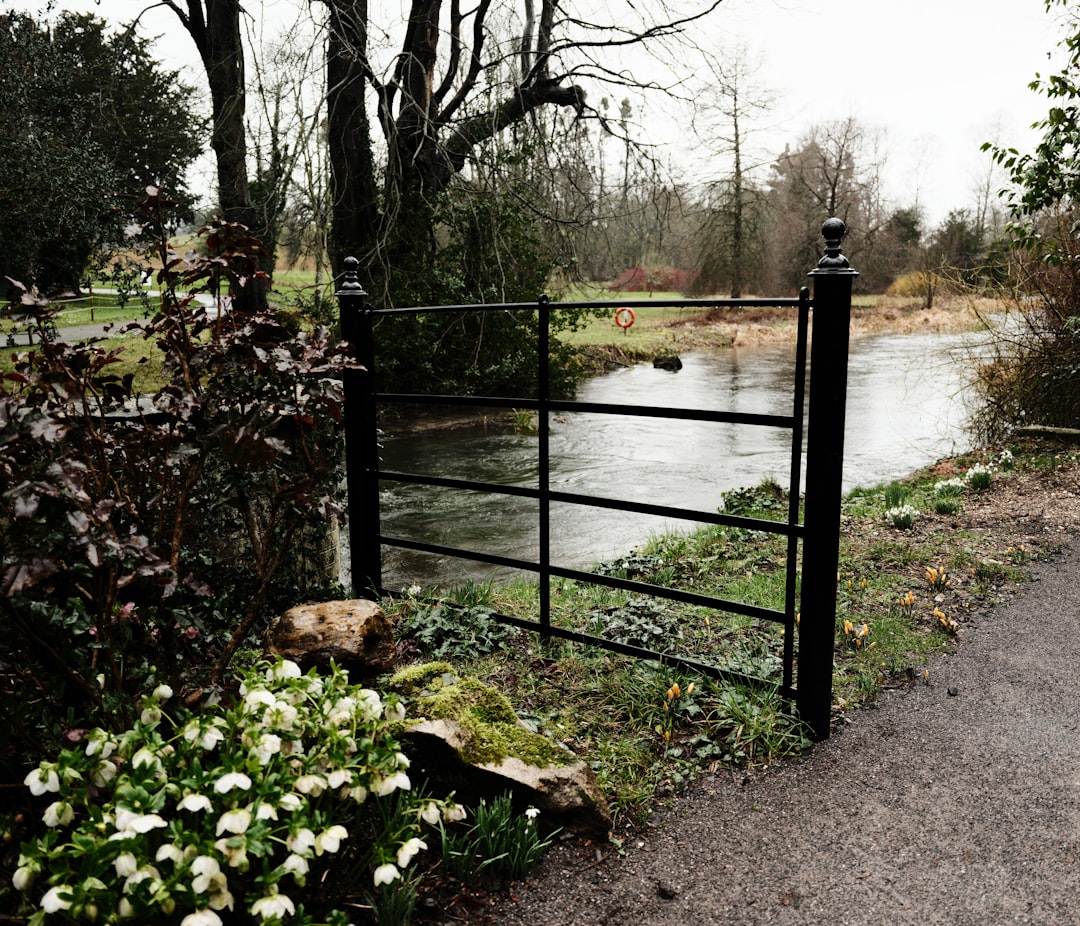
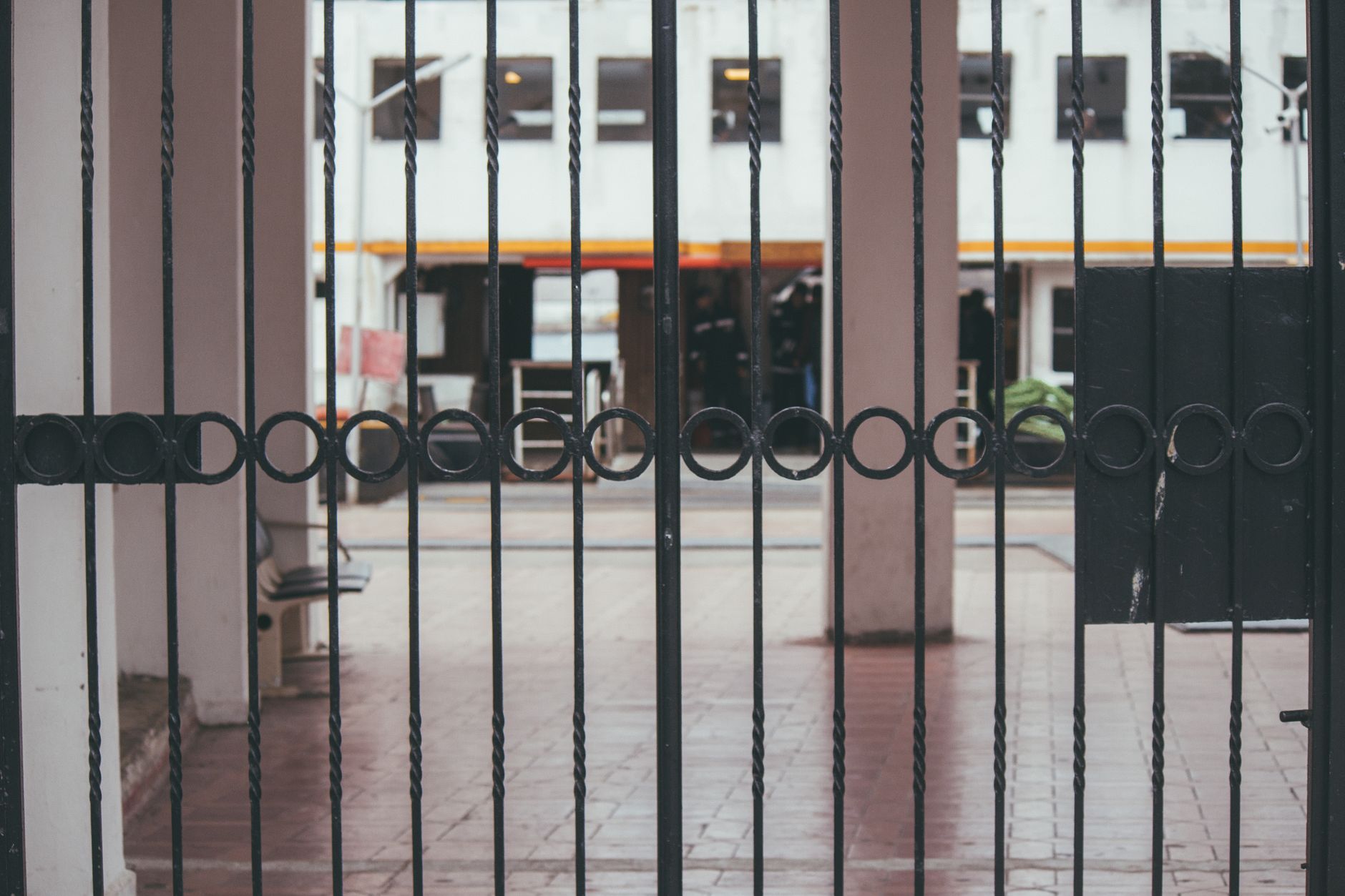
Powder-coated steel gate finished against rust in Pearland, TX

Keeping a Metal Gate Rust-Free on the Gulf Coast

Pearland sits close enough to the coast that humidity is a fact of life, and humidity is what turns bare steel to rust. A metal gate here lives outdoors every day, so how it is built and finished decides whether it lasts five years or twenty-five. Here is how our fabricators keep a gate solid against the Gulf Coast climate.

Start With the Right Metal

Rust protection begins before the first weld. We build with hot-dip galvanized steel and mild-steel tubing rather than bare stock, because the zinc coating on galvanized steel is a sacrificial layer that corrodes before the steel underneath does. On coastal jobs, aluminum is worth considering too, since it will not rust at all, though it flexes more on wide spans. Choosing the metal is the first line of defense.

Prime and Powder Coat Every Weld

Welds are where rust likes to start, because grinding a joint exposes fresh steel. We treat every joint with a zinc-rich primer, then seal the whole gate with an electrostatic powder coat or an enamel topcoat. That finish is what stands between the metal and the moisture that rolls in off the bay. A properly coated gate sheds water instead of holding it against the steel. Our wrought iron gates get the same treatment on every scroll and finial.

Watch the Hardware and the Ground Line

The parts that move and the parts that touch the ground fail first. Hinges, latches, and the base of each post take the most abuse, so we use weld-on or ball-bearing hinges and set posts in concrete footings that shed water away from the steel. Keeping the gate from dragging on the ground also matters, since a gate that scrapes wears through its finish fast.

Give It a Yearly Rinse and Touch-Up

Maintenance is simple but it makes the difference. Once a year, rinse the gate with mild soap and water to clear the salt and grime that hold moisture against the finish. While you are at it, look for any chips or scratches in the coating and dab them with touch-up enamel before they can bloom into rust. Ten minutes of care each year adds years to the gate.

Fix Small Rust Early

If a spot of rust does appear, deal with it early. Sanding it back, priming, and recoating a small area is a quick job, while ignoring it lets the corrosion spread under the finish. We handle rust remediation and refinishing on gates we did not build too, so an older gate can often be saved rather than replaced.

Want a gate built to beat the Pearland climate, or an older one brought back to life? Call E-wolontariat at (281) 874-4569 or contact us for a free on-site estimate.

The Gate Work Our Fabricators Perform

One local welding crew for driveway gates, automation, ornamental iron, and everything in between.

01Driveway and Entry Gates
Single-swing, double-swing, and cantilever slide gates sized to your driveway and set on structural posts or a gate track.
02Automatic and Motorized Systems
Slide and swing operators with control boards, keypads, remotes, photo-eyes, and loop detectors, wired to line power or solar.
03Wrought Iron and Ornamental Gates
Custom-forged and welded gates with pickets, scrolls, and finials, matched to your fence and finished with primer and powder coat.
04Security and Access Control
Perimeter and pedestrian gates integrated with keypads, card readers, and telephone or video intercom entry for homes and businesses.
05Chain-Link and Ranch Gates
Galvanized chain-link swing and rolling gates plus tubular ranch gates for yards, fields, and commercial lots.
06Gate Repair and Refinishing
Sagging gate correction, hinge and latch replacement, operator troubleshooting, welding of cracked frames, and refinishing of rusted iron.

What Our Gate Work Costs

Gate pricing depends mostly on the size of the opening, the metal, and whether you want automation. A simple steel walk-through gate is the most economical, a custom ornamental driveway gate sits in the middle, and a full motorized system with an operator and safety sensors runs higher. The ranges below are typical for the Pearland area, and we put a firm number in writing after a free on-site measure.

Steel pedestrian gate$300 to $1,200 per gate
  • Single walk-through opening
  • Steel or aluminum with hinges and latch
Get estimate
Ornamental iron driveway gate$1,500 to $6,000 per job
  • Custom-fabricated single or double swing
  • Powder-coated to your span and height
Get estimate
Automated gate system$4,000 to $12,000 per job
  • Operator, control board, and safety photo-eyes
  • Keypad, remotes, wiring, and loop detector
Get estimate
  • Built by real fabricatorsEvery gate is welded and hung by our own crew, not subbed out to a day labor team.
  • Finished to beat the rustGalvanized steel, zinc-rich primer, and powder coat protect the metal against Gulf Coast humidity.
  • Written prices up frontYou get an itemized, written quote before we cut a single length of steel.
  • Local and coast-testedA licensed, insured Pearland-area crew that knows what the climate does to metal.
  • E-wolontariat provides metal gate installation in Pearland, TX, handling everything from MIG and TIG welding and powder coating to hot-dip galvanized fabrication, cantilever slide gate assembly, and gate operator wiring. We build single-swing and double-swing driveway gates, motorized entry systems, ornamental wrought iron, and chain-link and ranch gates, then finish each one with a rust-inhibiting primer and topcoat. Whether the job sits off Dixie Farm Road or out near Shadow Creek Ranch, we size the gate to the opening and set it on structural posts poured deep in concrete.

    Fabrication is a trade you learn at the welding table, and our crew has spent years running bead after bead on steel and iron gates along the Gulf Coast. That experience shows up in the small things. A corner joint that stays tight after a decade of humid Pearland summers. A hinge that swings true. A powder-coat finish that does not chalk or peel. We fabricate in the shop and hang on site, so the gate you get was built by the same hands that measured your opening on Manvel Road or Cullen Parkway.

    Steel and salt air do not mix, and Pearland sits close enough to the coast that rust is the enemy of any gate. We fight it at every step, starting with galvanized steel posts and mild-steel tubing, a zinc-rich primer, and an electrostatic powder coat that seals the metal against the moisture that rolls in off the bay. On ornamental work we hand-finish the scrolls and cast finials so the whole gate ages evenly. A gate built this way in the 77584 area should give you twenty years or more before it needs more than a wash.

    We keep the process straightforward. We come measure your opening, talk through swing versus slide and manual versus automated, and hand you a written price before any steel is cut. Then we fabricate, set the posts in concrete footings, hang the gate, and wire the operator if you want one, complete with photo-eyes and a keypad. Most residential jobs near Barry Rose Road or Silverlake wrap up in a few days once the material is ready.

    The Pearland Area We Serve

    We fabricate and install gates throughout Pearland and the surrounding Brazoria County communities, from the newer master-planned neighborhoods to the older homes and ranch properties nearby.

    Not sure if we reach your property? Call (281) 874-4569 and we will let you know.

    • Pearland, TX (77581, 77584)
    • Manvel, TX
    • Friendswood, TX
    • Alvin, TX
    • Iowa Colony, TX
    • Missouri City, TX

    Questions for Our Gate Team

    How much does it cost to install a metal driveway gate?
    It depends on the span, the metal, and whether you add automation. A manual ornamental iron driveway gate typically runs from $1,500 to $6,000, while a motorized system with an operator and safety sensors starts around $4,000. We give a firm written price after a free on-site measure.
    What is the difference between a swing gate and a sliding gate?
    A swing gate pivots open on hinges and needs clear space for the arc, which suits most residential driveways. A sliding or cantilever gate rolls sideways and is the better choice when the driveway slopes or space is tight. We help you pick based on your opening.
    How long does a metal gate installation take?
    Most residential gates are fabricated in the shop and then installed on site in a day or two once the posts are set and the concrete has cured. A full automated system with wiring and access control takes a little longer.
    Do I need a permit to install a driveway or security gate?
    Some Pearland neighborhoods and HOAs require approval, and setback and right-of-way clearances apply near the street. We build to code clearances and can talk you through what your property needs before we start.
    What is the best metal for a gate: wrought iron, steel, or aluminum?
    Steel and wrought iron are strong and hold ornamental detail well but need a good finish to resist rust. Aluminum is lighter and will not rust, which suits the humid Gulf Coast, but it is less rigid on wide spans. We match the metal to the gate and the setting.
    Can you automate my existing manual gate?
    Often, yes. If the frame and posts are sound and sized for the load, we can add a slide or swing operator, a control board, photo-eyes, and a keypad or remote. We inspect the gate first to confirm it can carry an operator safely.
    How do I keep a metal gate from rusting?
    Start with galvanized steel and a proper finish. We use a zinc-rich primer and a powder-coat or enamel topcoat, and a yearly rinse plus a quick touch-up of any chips keeps a gate solid for decades in the Pearland climate.
    Do you serve my area?
    We cover Pearland ZIP codes 77581 and 77584, plus nearby Manvel, Friendswood, Alvin, Iowa Colony, and Missouri City. Call us if your property is just outside those and we will let you know.

    Talk With a Gate Specialist

    Ready for a new gate? We will measure your opening, walk you through swing versus slide, metals, and automation, and give you a clear written estimate with no pressure. Most Pearland gates are fabricated and hung within a few days once the design is set, and we handle everything from post setting to the final finish coat.